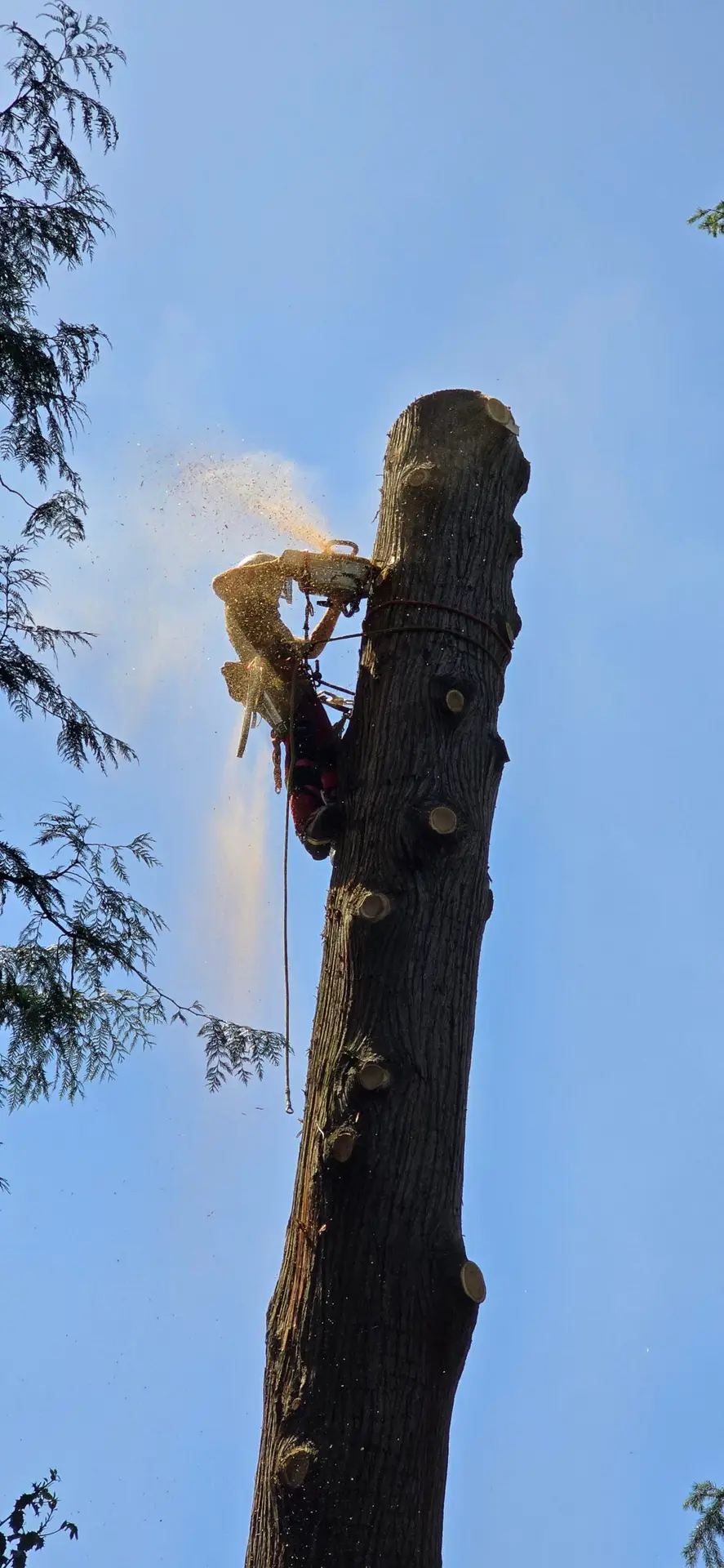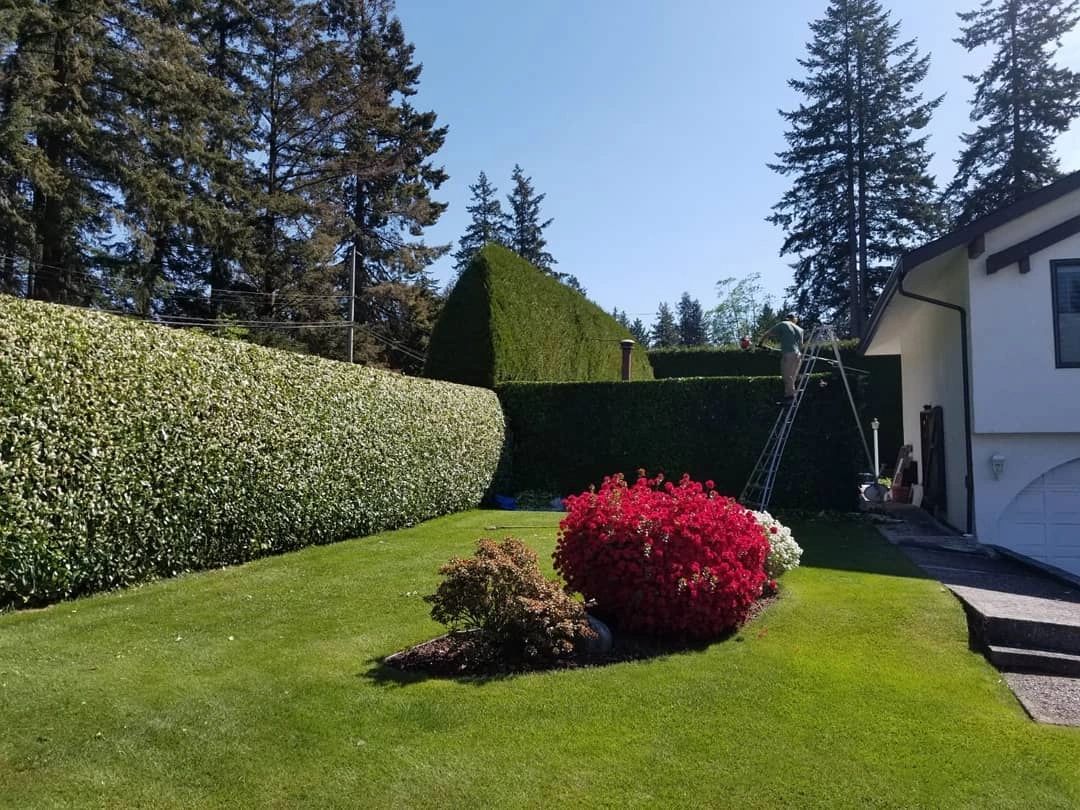
When it comes to maintaining healthy and attractive trees, tree pruning and tree trimming are often used interchangeably. While both involve removing branches, they serve different purposes and require different approaches.
Understanding the difference between tree pruning vs tree trimming can help property owners determine what type of tree care their trees need and when it is best to call a professional.
What Is Tree Pruning?
Tree pruning is primarily focused on the health, structure, and long-term development of a tree. It involves carefully removing specific branches that are dead, diseased, damaged, weak, or growing in a way that could affect the tree’s structure.
Professional pruning may also be used to improve airflow through the canopy, reduce the risk of branch failure, and encourage healthy growth.
Some common reasons for tree pruning include:
- Removing dead or diseased branches
- Removing damaged or broken limbs
- Improving the tree’s structure
- Reducing the risk of falling branches
- Improving airflow and sunlight penetration
- Managing branches that are crossing or rubbing
- Encouraging healthy, balanced growth
Because pruning directly affects the structure of a tree, it should be performed carefully. Removing too many branches or making improper cuts can stress the tree and potentially create long-term problems.
What Is Tree Trimming?
Tree trimming generally focuses more on managing the size, shape, and appearance of a tree. It may involve removing overgrown branches to maintain clearance around buildings, driveways, walkways, power lines, or other structures.
For example, a tree may need trimming if branches are growing too close to your roof or extending over a driveway.
Tree trimming can help:
- Maintain a manageable tree shape
- Remove overgrown branches
- Maintain clearance around structures
- Improve the appearance of a landscape
- Reduce interference with walkways and driveways
- Manage excessive or unwanted growth
However, trimming should not simply mean cutting branches wherever they appear inconvenient. Trees have natural growth patterns, and excessive cutting can negatively affect their health.
The Main Difference Between Tree Pruning vs. Tree Trimming
So, what is the difference between tree pruning vs tree trimming?
The simplest way to look at it is:
Tree pruning is primarily about tree health and structure, while tree trimming is generally focused on controlling growth, clearance, and appearance.
There can be some overlap between the two services. For example, a professional may remove a dead branch during a trimming job, or prune a branch that is growing toward a building.
The terminology can also vary between tree care companies. Some businesses use “trimming” as a general term for several types of tree maintenance. This is why it is more important to understand what work needs to be performed rather than focusing only on the terminology.
When Does Your Tree Need Pruning?
Trees may require pruning when there are visible signs of structural or health concerns.
Look for branches that are:
- Dead or visibly decaying
- Broken or damaged
- Crossing or rubbing against other branches
- Growing unusually weak or poorly attached
- Diseased
- Creating an unbalanced canopy
Pruning may also be appropriate when a tree needs structural correction while it is developing.
Regular professional inspections can help identify potential problems before they become more serious.
When Does Your Tree Need Trimming?
Tree trimming may be appropriate when branches have become overgrown or are interfering with your property.
For example, you may need trimming when branches are:
- Growing toward your home
- Blocking windows or views
- Extending over walkways
- Interfering with driveways
- Creating clearance issues around structures
- Making the tree appear excessively overgrown
Trees near buildings and other structures require particular care because removing too much growth can create unnecessary stress.
Why Professional Tree Care Matters
Tree maintenance may look straightforward, but cutting the wrong branch or removing too much of the canopy can cause problems.
Professional tree-care specialists understand how different species grow and can identify which branches should be removed while preserving the tree’s natural structure.
They can also assess potential hazards, particularly when dealing with large trees, high branches, damaged limbs, or trees located close to buildings and other structures.
Professional pruning and trimming can help maintain the tree while reducing unnecessary risks to your property.
How Often Should Trees Be Pruned or Trimmed?
There is no single schedule that works for every tree. The appropriate frequency depends on the tree species, age, size, location, health, and growth rate.
Young trees may benefit from structural pruning as they develop, while mature trees may require maintenance pruning to address dead, damaged, or problematic branches.
Trees growing near buildings or other structures may also need more frequent attention to maintain appropriate clearance.
Rather than pruning or trimming simply because a certain amount of time has passed, it is better to have the tree assessed based on its current condition and needs.
Choose the Right Tree Care for Your Property
Understanding tree pruning vs tree trimming makes it easier to identify the right type of maintenance for your trees.
While the terms are sometimes used interchangeably, pruning generally focuses on health and structure, whereas trimming often focuses on managing growth, appearance, and clearance.
Whether your tree has dead branches, overgrown limbs, structural issues, or branches growing too close to your property, professional tree care can help keep it healthy, safe, and well-maintained.
Need help determining whether your trees need pruning or trimming? Contact a professional tree care company for an assessment and recommendations tailored to your property.