Professional Tree Removal in Vancouver, Delta, and Across the Lower Mainland
Whether you need emergency tree removal in Delta, a hazardous tree removed in Ladner, or safe and efficient tree removal in Tsawwassen, Pinecrest has you covered.
Our experienced team provides professional tree removal services throughout Delta and the Lower Mainland. Every project is completed safely, efficiently, and in compliance with local municipal tree bylaws. We are fully licensed, insured, and committed to protecting both your property and the surrounding environment.
If you’re concerned about a tree on your property, the first question isn’t always “How much will it cost to remove it?”
Often, it’s:
“Does this tree actually need to be removed?”
Not every damaged, leaning, diseased, or aging tree needs to come down. Depending on the situation, professional pruning, treatment, support, or ongoing monitoring may be a better option.
If you’re not sure what your tree needs, a professional assessment can help you understand the condition of the tree, the potential risks, and your options before you make a decision.
Why Property Owners Choose Professional Tree Removal?
Tree removal becomes necessary for many reasons, including safety concerns, property improvements, and tree health.
You may need a tree removed if it is:
- Storm-damaged or structurally unsafe
- Dead, dying, or severely diseased
- Leaning dangerously toward a home or structure
- Causing damage to driveways, sidewalks, or foundations with invasive roots
- Interfering with construction, renovations, or landscaping projects
- Overcrowding your landscape and preventing healthy tree growth, sunlight, or airflow
Our certified tree removal professionals assess each tree carefully and recommend the safest, most appropriate solution.
However, these signs don’t automatically mean the entire tree needs to be removed.
Our certified tree removal professionals assess each tree carefully and recommend the safest, most appropriate solution. Depending on the situation, that may mean pruning, treatment, monitoring, risk reduction, or removal.
7 Signs Your Tree Should Be Assessed by An Arborist
You don’t necessarily need to remove a tree because it has one of these signs. Instead, these are situations where a professional assessment can help you understand the tree’s condition and determine what should happen next.
1. Large Dead or Broken Branches
Dead branches can become weak and may fall, particularly during high winds or severe weather.
Look for:
- Large dead branches
- Broken limbs hanging in the canopy
- Branches that have recently fallen
- Large areas of deadwood
- Branches extending over a house, driveway, walkway, or other frequently used area
Not every dead branch means the entire tree needs to be removed. Often, targeted pruning can address individual branches while keeping the rest of the tree.
If you’re seeing significant deadwood or aren’t sure how serious it is, an arborist can assess the tree and recommend the appropriate next step.
2. Cracks, Cavities, or Signs of Decay in the Trunk
The trunk provides much of a tree’s structural support, so significant cracks, cavities, decay, or other structural defects deserve attention.
Pay particular attention to:
- Large vertical cracks
- Splitting around major branch unions
- Large cavities
- Areas of soft or decaying wood
- Fungal growth associated with suspected decay
- Significant damage to the trunk
A visible defect does not automatically mean the tree must be removed.
The important question is whether the defect affects the tree’s structural stability and creates an unacceptable level of risk.
3. The Tree Is Leaning or the Roots Appear Damaged
Some trees naturally grow with a slight lean. A new or worsening lean can be more concerning, particularly when it is accompanied by root movement or soil disturbance.
Watch for:
- A tree that has recently started leaning
- Soil lifting around the root plate
- Exposed or damaged roots
- Cracks in the ground near the trunk
- Recent excavation or construction near the tree
- A noticeable change after a major windstorm
If a tree has shifted suddenly or appears unstable, avoid trying to correct the problem yourself. Have the tree assessed by a qualified professional.
4. The Tree Has Suffered Significant Storm Damage
Wind, heavy rain, and storms can expose structural problems that weren’t obvious before.
After a major storm, look for:
- Broken major branches
- Split limbs
- A damaged or broken main stem
- Hanging branches
- Root movement
- New cracks
- A tree that has suddenly changed position
Some storm-damaged trees can be stabilized or pruned rather than removed.
Others may have sustained enough structural damage that removal is the safest option.
If you’re unsure, have the tree assessed before deciding what to do.
5. The Tree Is Showing Serious Decline or Disease
Changes in a tree’s health can have many causes.
Possible warning signs include:
- Significant canopy dieback
- Unusual or persistent loss of foliage
- Dead sections of the crown
- Extensive decay
- Repeatedly declining growth
- Signs of pests or disease
A sick or declining tree isn’t automatically a candidate for removal.
The important questions are:
Can the tree recover?
Can the problem be managed?
Is the tree still structurally safe?
An arborist can help determine whether treatment, pruning, monitoring, or removal makes the most sense.
6. The Tree Is Creating a Significant Risk to a Building, Utility, or High-Use Area
A tree’s condition is only part of the risk.
Its location matters too.
For example, a damaged branch over an open field presents a different level of concern than the same branch over:
- A house
- A garage
- A driveway
- A sidewalk
- A parking area
- A playground
- A commercial entrance
- Utility infrastructure
Sometimes pruning or other management can reduce the risk. In other situations, removal may be the safest practical option.
7. You’re Simply Not Sure What You’re Looking At
This may be the most important sign of all.
If you’re standing in your yard thinking:
“I don’t know if this tree is dangerous.”
or:
“Does this really need to come down?”
you don’t have to make the decision yourself.
A professional tree assessment can help identify the condition of the tree, potential risks, and possible management options.
The goal isn’t always to remove the tree. The goal is to understand what the tree needs and what makes sense for your property.
Does Every Problem Tree Need to Be Removed?
No.
Depending on the situation, the appropriate solution may include:
- Professional pruning
- Structural pruning
- Tree health assessment
- Treatment
- Monitoring
- Risk reduction
- Support or other management
- Removal
For example, a tree with a few damaged branches may only need professional pruning. A tree showing signs of disease may need a health assessment. A tree with significant structural defects or severe decline may require removal.
The right decision depends on the individual tree, its condition, its surroundings, and the level of risk involved.
| What you’re seeing | Possible next step |
|---|---|
| Dead or damaged branches | Professional pruning |
| Overgrown or poorly structured canopy | Structural pruning |
| Signs of disease or decline | Tree health assessment |
| Storm damage | Arborist assessment |
| Structural concerns | Tree risk assessment |
| Severe decline or unacceptable risk | Possible removal |
| You’re not sure | Professional assessment |
A good tree care decision should be based on the condition of the tree, the level of risk, and the needs of the property; not simply on how the tree looks from the ground.
Understanding Local Tree Removal Bylaws
Tree removal regulations vary by municipality, and removing a protected tree without approval can result in significant fines.
These bylaws are designed to preserve urban forests, protect environmentally sensitive areas, and ensure that healthy, mature trees are only removed when necessary.
Before removing a tree, it’s important to determine whether a permit is required based on factors such as the tree’s size, species, location, and condition.
Vancouver
- Trees measuring 20 cm (8 inches) or more in diameter generally require a permit before removal.
- Replacement tree planting may be required after removal.
- Unauthorized tree removal can result in fines of up to $10,000.
Delta
Delta has its own tree-protection requirements for trees on private property.
The City states that protected trees generally include trees measuring 20 cm (8 inches) or greater in diameter, measured 1.4 metres above ground, as well as certain replacement trees. A Tree Removal Permit may be required before removal.
Requirements can vary depending on the circumstances, including the size and number of trees, the property, and whether the work is related to development or construction.
Sunshine Hills Tree Protection Changes
Delta introduced additional tree-protection requirements for the Sunshine Hills pilot area effective June 16, 2026.
Among the changes:
- The definition of a large-diameter tree was lowered from 60 cm to 50 cm or greater.
- The previous “1 tree in 24 months” allowance was removed within the pilot area.
- Tree removals in the Sunshine Hills neighbourhood require an arborist report with a stated rationale for removal and a tree-replacement plan.
- A new Significant Tree category applies to certain trees with a trunk diameter of 70 cm or greater, depending on species.
- Additional permit fees and tree-replacement requirements apply to certain Significant Tree removals.
Because municipal requirements can change, always verify Delta’s current requirements before removing or significantly pruning a protected tree.
[Check the current City of Delta tree-removal requirements before starting work.]
Our team can also help you understand the requirements and determine what information may be needed for your project.
Our Professional Tree Removal Services
At Pinecrest, we provide safe, efficient, and reliable tree removal solutions for residential and commercial properties throughout the Lower Mainland.
Whether you’re dealing with a hazardous tree, storm damage, or preparing your property for a new project, our experienced team has the expertise and equipment to handle the job with precision.
Our tree removal services include:
✅Tree removal in Delta, Ladner, Tsawwassen, Vancouver, and surrounding communities
✅Hazardous tree removal near homes, buildings, fences, and utility lines
✅Emergency tree removal following storms, high winds, or fallen trees
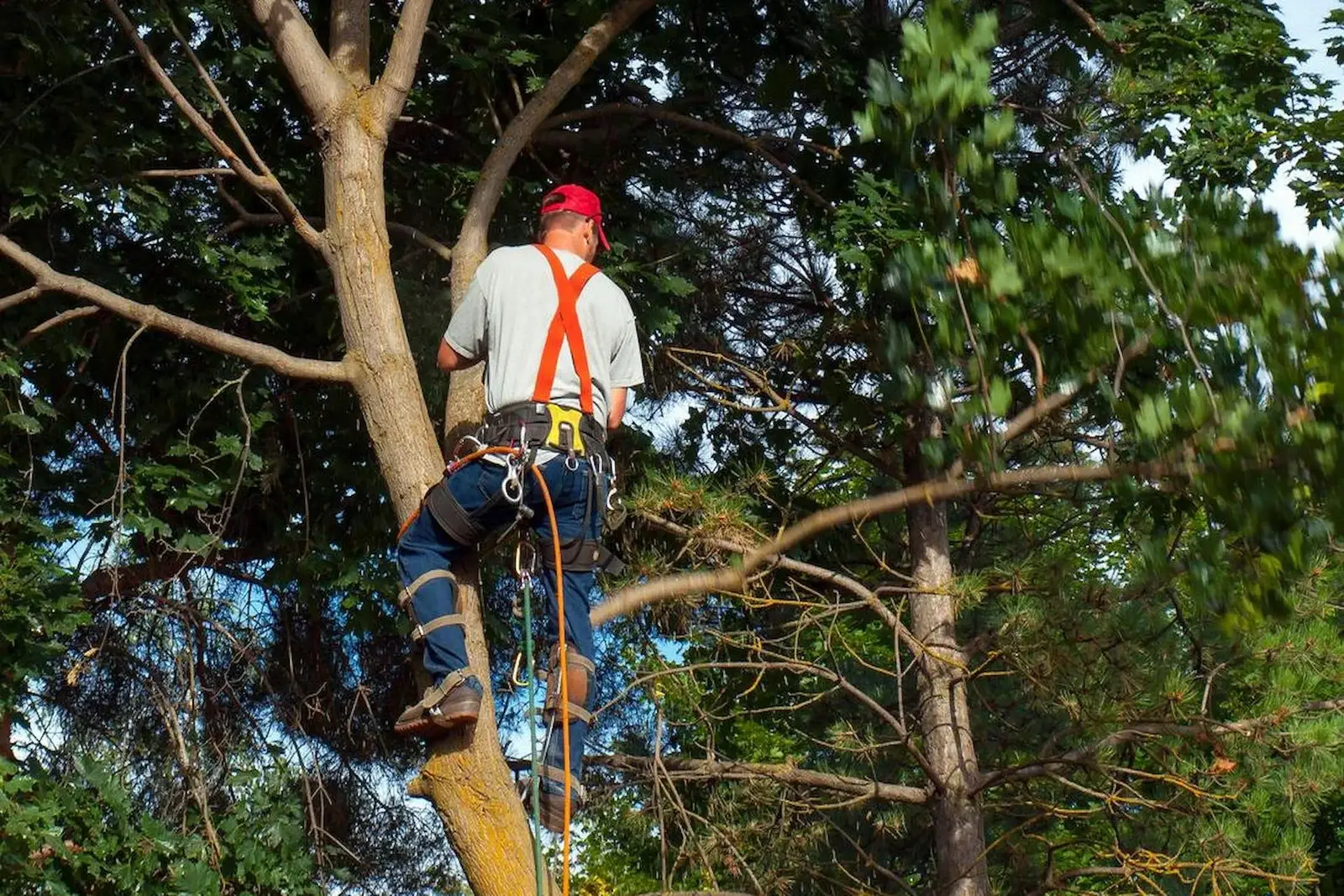
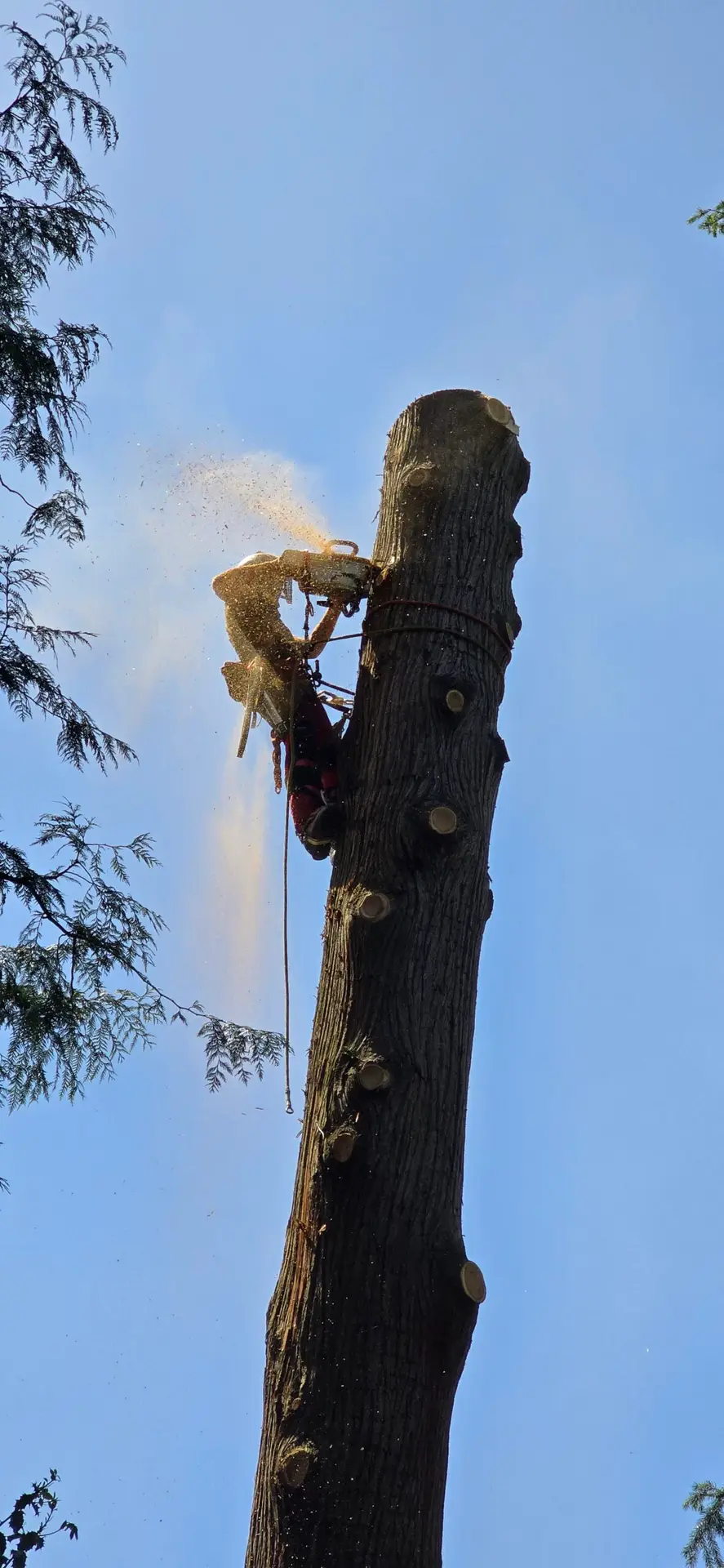
✅Technical tree climbing and sectional dismantling for trees in confined or difficult-to-access areas
✅Stump grinding and complete debris removal to leave your property clean and ready for use
✅Land clearing and tree removal for new construction, renovations, and development projects
✅Dead, diseased, and structurally compromised tree removal to reduce safety risks and protect nearby property
✅Tree risk assessments to determine whether removal is the safest and most appropriate solution
From small residential removals to large, complex projects, we prioritize safety, efficiency, and minimal disruption while ensuring every job is completed to the highest professional standards.
Areas We Serve
We proudly provide professional tree removal near you throughout the Lower Mainland, including:
- Vancouver
- Delta
- Ladner
- Tsawwassen
- Richmond
- Surrey
- Burnaby
- New Westminster
If you’re located nearby, contact us to see how we can help.
Why Choose Pinecrest?
We’re local, fully insured, and follow all WorkSafeBC regulations. Our team uses proper PPE, climbing gear, and equipment to ensure safe, clean tree removal every time.
Choosing the right tree removal company means choosing a team that prioritizes safety, professionalism, and quality workmanship.
With Pinecrest, you can expect:
✔ Experienced tree climbers and arborists
✔ Affordable tree removal in Delta and Tsawwassen
✔ Stump grinding included on request
✔ Residential & commercial properties
✔ Fast response times and emergency service
We treat every property with care and leave your outdoor space clean, safe, and ready for its next use.
How Much Does Tree Removal Cost?
Tree removal costs depend on several factors, including:
- Tree size and height
- Tree species and condition
- Accessibility
- Proximity to buildings, fences, and utility lines
- Equipment required
- Permit requirements
- Climbing and rigging requirements
- Cleanup and disposal
- Stump grinding
Every property is different, so there isn’t one price that applies to every tree removal.
Smaller tree removals may cost significantly less than large or complex removals involving difficult access, structures, utility lines, specialized equipment, or extensive rigging.
Smaller tree removals typically start around $450, while larger or more complex removals may range from $1,200 to $4,000 or more.
The pricing ranges previously provided by Pinecrest should be treated as general estimates and confirmed with the company, as project costs can change over time.
We provide transparent, no-obligation estimates so you know what to expect before work begins.
When Should You Call an Arborist?
Consider getting professional advice if:
- A large branch has broken
- You see significant cracks or decay
- A tree has suddenly started leaning
- Roots or soil around the tree have shifted
- A tree has suffered major storm damage
- Large areas of the canopy are dying
- The tree is close to a house, driveway, walkway, or other high-use area
- You’re considering removing a mature tree
- You’re unsure whether pruning or removal is the right option
You don’t have to decide on removal before calling an arborist.
An assessment can help you understand whether pruning, monitoring, treatment, risk reduction, or removal is the most appropriate option.
Frequently Asked Questions
Do I need a permit to remove a tree in Delta or Ladner?
In many cases, yes. Delta’s requirements depend on factors such as tree size, location, property circumstances, and whether the tree is protected under the City’s current requirements. Check Delta’s current tree-removal requirements before beginning work.
Our team can help you understand what requirements may apply to your project.
Can you safely remove trees close to houses or power lines?
Yes. We specialize in technical tree removals using professional climbing, rigging, and sectional dismantling techniques to safely remove trees in confined or high-risk locations.
Do you remove the stump after cutting down the tree?
Yes. We offer optional stump grinding and complete debris removal, leaving your property clean and ready for landscaping or future use.
Do you provide emergency tree removal?
Absolutely. If a tree has fallen or poses an immediate safety hazard after a storm, our emergency response team can quickly assess the situation and remove the tree safely.
Does a dead tree always need to be removed?
Not necessarily.
The decision depends on the tree’s condition, structural stability, location, and potential risk. In some situations, pruning, monitoring, or other tree-care measures may be appropriate.
Does a leaning tree always need to be removed?
No.
Some trees naturally grow with a slight lean. A new or worsening lean, especially when accompanied by root movement or other structural concerns, should be assessed by a qualified professional.
Can a storm-damaged tree be saved?
Sometimes.
Depending on the type and severity of the damage, pruning or other tree-care measures may be possible. More serious structural damage may make removal the safer option.
Should I prune a tree or remove it?
It depends on the problem.
If the issue is limited to certain branches, pruning may be appropriate. If the tree has severe structural problems or presents an unacceptable level of risk, removal may be recommended.
When should I call an arborist?
If you’re concerned about a tree’s health, structure, storm damage, safety, or proximity to people and property or you’re simply unsure what you’re looking at, an arborist can assess the situation and explain your options.
Request Your Free Tree Removal Estimate Today!
Not sure whether your tree needs to be removed?
Whether you’re dealing with storm damage, a declining tree, structural concerns, or simply aren’t sure what you’re seeing, the Pinecrest team is here to help assess the situation and explain your options.
We provide safe, reliable, and bylaw-compliant tree removal services throughout Vancouver, Delta, Ladner, Tsawwassen, and the surrounding Lower Mainland.
Contact us today for a free, no-obligation estimate, and let our experienced professionals handle your tree removal project with confidence.
📞 Call: 604-961-8406
📧 Email: info@pinecrestltd.ca
🌐 Visit: www.pinecrestltd.ca
Need emergency tree removal? Our team offers prompt response times to help protect your property when unexpected tree hazards arise.